
Small Changes, Serious Impact: Why Continuous Improvement Matters for SMEs
Too many SMEs delay improvement while waiting for the right budget, the right technology or the right moment. The reality is that progress rarely starts with a big initiative, it starts with a better way of doing today's work. It starts with Continuous Improvement.
Running an SME has never been simple
Rising costs, increasing customer expectations, labour shortages, ESG pressures, digital transformation and economic uncertainty are all competing for attention. Against that backdrop, it's easy to assume that meaningful business improvement requires a major intervention: a new ERP system, a restructuring programme, process overhauls, all which require significant investment.
That assumption often stops businesses from improving at all.
Some of the most impactful improvements seen within SMEs don't come from large-scale transformation programmes. They come from small, practical changes that remove waste, simplify processes, improve communication and make life easier for the people doing the work every day.
That is the essence of continuous improvement.
While continuous improvement and Kaizen have their roots in Lean manufacturing, the principles are as relevant today as ever and can be applied to any industry and business model. The idea is simple: identify problems, solve them, standardise the improvement and repeat.
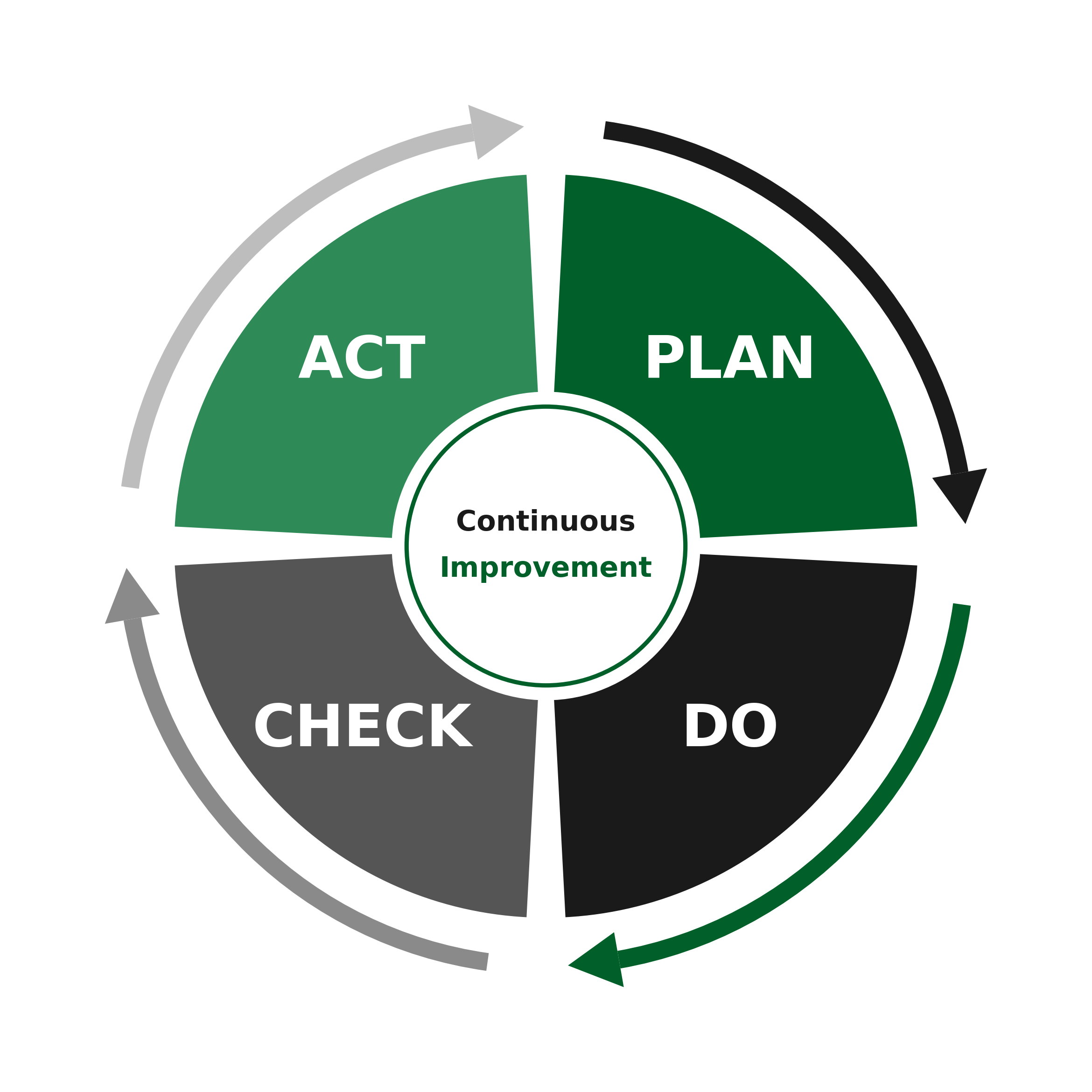
Over time, these improvements compound and create significant operational, commercial and cultural benefits. The Lean Enterprise Institute defines continuous improvement as an ongoing effort to improve processes, systems and activities through small incremental changes that enhance efficiency, quality and customer satisfaction (Lean Enterprise Institute, 2017a).
The simplicity of the concept is exactly why it remains so powerful for SMEs.
The Myth of the Big Transformation
Business success stories often focus on major projects.
A new system. A large digital transformation programme. A factory expansion. A new operating model.
Those initiatives undoubtedly create value and are critical for growth. However, they tend to dominate conversations about improvement to the point where many SME leaders begin to believe that substantial progress is only possible through large-scale transformation.
This is not the reality.
Many operational problems exist in plain sight. Customer information duplicated across systems, repeated manual data entry, poor interdepartmental communication and single points of failure. One of the most common examples: information that exists in multiple spreadsheets because nobody trusts the central system.
Individually, these issues can seem too small to justify a dedicated project. Collectively, they create friction that impacts productivity, profitability and customer experience.
The danger is that businesses become accustomed to these inefficiencies and the "we've always done it this way" mentality. Workarounds become accepted practice. Employees spend time solving the same problems each week rather than addressing the root cause and inefficiencies are absorbed into the day-to-day operation and normalised
Continuous improvement challenges that thinking.
Instead of waiting for a major transformation programme to solve every issue, it encourages businesses to tackle problems where they occur, one improvement at a time, and by engaging all staff to contribute.
Why Kaizen Still Matters
Kaizen loosely translates to "change for the better".
Although commonly associated with Toyota, Kaizen is less a methodology and more a philosophy. Toyota describes Kaizen as a core principle of the Toyota Production System that focuses on ongoing, incremental improvements to quality, efficiency and performance. It emphasises removing unnecessary processes, empowering employees and continuously refining standardised ways of working (Toyota UK, 2026).
What makes Kaizen particularly relevant to SMEs is that it was never designed to rely on large budgets.
The Lean Enterprise Institute highlights that Kaizen focuses on making small improvements that lead to significant long-term benefits. The philosophy encourages employees at all levels of an organisation to identify opportunities for improvement and implement practical solutions through a continuous cycle of learning and problem solving (Lean Enterprise Institute, 2017b).
Most SMEs are not short of ambition or creativity. They are short of time, resource and capacity.
Large organisations may be able to dedicate entire teams to transformation where most SMEs cannot and improvement has to happen alongside day-to-day operations, which makes the practicality of Kaizen particularly attractive.
The Compound Effect of Small Improvements
One of the most underestimated concepts in business improvement is compounding.
Most of us notice dramatic changes such as a new building, a new system or a new organisational structure that creates visible progress.
Small improvements don't quite make the same splash.
Removing five minutes from an administration process does not make headlines, improving the quality of data entered into a system. Yet these are often the changes that deliver the greatest compounded value and improves both customer and employee satisfaction.
An approval process that takes one day instead of three improves responsiveness. A reduction in rework increases capacity. Better information flow improves decision-making. Fewer errors reduce wasted effort.
Over time, these seemingly minor improvements begin to stack together. And the result is not just operational efficiency, it is increased resilience, improved customer satisfaction and greater agility.
Continuous improvement is not powerful because every individual change is transformative. It is powerful because hundreds of small improvements accumulate into meaningful business performance gains.
Why Continuous Improvement Works Particularly Well in SMEs
The reality for most SMEs is that resources are finite.
Business at OECD notes that SMEs face structural constraints linked to limited financial, human and technological resources, factors which can restrict innovation and competitiveness when compared with larger organisations (Business at OECD, 2025).
Similarly, OECD research identifies managerial skills, workforce capability and internal business practices as key drivers of SME productivity. Productivity is not simply a function of investment as how effectively a business uses its existing resources matters just as much (Marchese et al., 2019).
This creates an exciting opportunity.
While SMEs may have fewer resources than large organisations, they also tend to have fewer layers of bureaucracy meaning decisions can be made faster and changes can be implemented more quickly through shorter communication pathways
In many cases, SMEs are naturally positioned to adopt continuous improvement more effectively than larger organisations.
A practical idea can move from suggestion to implementation far quicker and that agility becomes a significant competitive advantage when combined with a culture of continuous improvement.
Making Improvement Part of Everyday Work
One of the most common mistakes organisations make is treating improvement as a project.
Projects have start dates and end dates. Continuous improvement does not.
The goal is not to create a dedicated improvement initiative that lasts six months before everyone returns to old habits. The goal is to create an environment where improving the way work is done becomes part of the culture of the business.
This starts with empowering people.
The Lean Enterprise Institute notes that continuous improvement relies upon engaging employees in identifying and solving problems because those closest to the work often have the greatest insight into potential improvements (Lean Enterprise Institute, 2017a). The role every employee plays in identifying inefficiencies and contributing ideas for improvement within their own work environment cannot be underestimated (Toyota UK, 2026).
In practical terms, that means creating space for employees to identify inefficient processes and propose solutions for implementation.
After all, the people doing the work every day are often the first to know where waste exists, and if they are empowered to be part of the solution, it is more likely to succeed.
The Bigger Opportunity
Continuous improvement is often discussed in terms of operational efficiency.
That is important, but it doesn't fully appreciate the wider opportunity.
Businesses that embrace continuous improvement tend to be better positioned to adapt to future challenges. They become more responsive to customer expectations, more capable of adopting technology, better equipped to manage growth and more prepared for emerging requirements such as sustainability and ESG reporting.
Maintaining a 1% annual improvement in SME productivity over a five-year period could contribute an additional £94 billion to the UK economy and many SMEs underinvest in management capabilities and productivity-enhancing practices despite the potential benefits (Be the Business, 2023).
Meanwhile, work undertaken by The Productivity Institute, Be the Business and the Behavioural Insights Team found that even relatively light-touch interventions can encourage SME leaders to adopt productivity-enhancing behaviours and strategic management practices (Midwinter et al., 2025).
This presents a clear lesson: improvement does not have to be revolutionary or expensive to be impactful. Consistency can be far more powerful than disruption, and businesses that empower their teams to think 'CI' can gain an edge.
References
Be the Business (2023) 1% annual improvement in UK SME productivity would grow economy by £94bn in 5 years. Available at: https://bethebusiness.com/newsroom/annual-improvement-in-uk-sme-productivity-would-grow-economy-by-94bn-in-5-years/
Business at OECD (2025) Empowering SMEs: Securing Competitiveness for our Economies. Available at: https://www.businessatoecd.org/hubfs/Empowering%20SMEs:%20Securing%20Competitiveness%20for%20our%20Economies.pdf
Lean Enterprise Institute (2017a) Continuous Improvement aka "Kaizen". Available at: https://www.lean.org/lexicon-terms/continuous-improvement/
Lean Enterprise Institute (2017b) Kaizen — A Resource Guide. Available at: https://www.lean.org/lexicon-terms/kaizen/
Marchese, M et al 2019) Enhancing SME productivity: Policy highlights on the role of managerial skills, workforce skills and business linkages. OECD SME and Entrepreneurship Papers, No. 16. Paris: OECD Publishing. Available at: https://doi.org/10.1787/825bd8a8-en
Midwinter, H et al (2025) Developing a Scalable Solution to Improve SME Productivity: A Pilot Study. The Productivity Institute. Available at: https://www.productivity.ac.uk/research/developing-a-scalable-solution-to-improve-sme-productivity-a-pilot-study/.
Toyota UK (2026) What is Kaizen and how does Toyota use it? Available at: https://mag.toyota.co.uk/kaizen-toyota-production-system/
Found this useful?
Share on LinkedInTopics
Written by
George Baker